Cutting editing, cutting quality

I shared this Poynter article without comment on Twitter while I was on the go this morning, but I want to share it again with a few comments.

American Copy Editors Society president Teresa Schmedding says “The news industry can’t cut its way to quality” and she also notes she’s leaving daily journalism to become managing editor at Rotary International.

The upshot is without quality control, you can’t have quality journalism.

So, here are a few thoughts:

1. Journalism is losing a good person and a good editor. Unfortunately, journalism has lost far too many of them recently.

2. However, there are lots of ways to get and share information, and they need good editors, too. And as Teresa Schmedding said, right now many of those places put a higher value on the quality a good copy editor can bring.

3. On Saturday, I was one of many people who responded to a series of tweets from Tanzina Vega of CNN, who was reacting to a Business Insider article about newsroom cuts and the rush to publish and to “need” post a lot.

It’s time for a renewed push for quality control, and in organizations that publish words — and this includes all news organizations these days — quality control must include copy editing.

It’s great to see the growth of copy editing jobs in non-news settings. But to maintain trust, news organization shouldn’t be cutting their quality control.
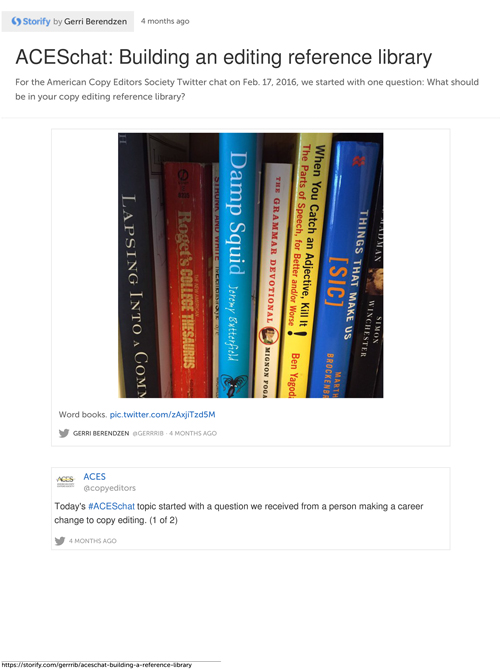
Editing bookshelves and bookmarks

Just a note. If you want to build up your editing reference library, especially your home library, you might want to take a look at a Storify I did from a February ACES Twitter chat.

With more and more copy editors doing some sort of freelance work, building a good home reference library is important. But it doesn’t always take wads of money. Many of these references can be kept in bookmarks instead of book shelves.

Still, I’d recommend paying for a subscription or hard back to the stylebook you use most often.

aceschat-library-1
Read the full chat at https://www.dropbox.com/s/vjxemuwhetxv97e/aceschat-building-a-reference-library.pdf?dl=0

A good editing topic for April Fool’s Day

As I awoke to tweets about April Fool’s Day on Friday, I realized I was doing the perfect April Fool’s Day thing that afternoon — talking to a group of copy editors at the American Copy Editors Society conference about how to verify information on social media and how not to get fooled by fakes.

A friend had posted a link to the Doobie Brothers song “What a Fool Believes,” but I immediately thought of The Who’s “Won’t Get Fooled Again.” So I made up a 34-second iMovie for the start of my session that featured the great opening riffs of that song behind a series of famous and not-so-famous fake social media posts and news.

Then I decided to share it a bit wider (even though I took the sound away so as not to run afoul of copyright laws. So you have to hum the beginning of the song.)

Here’s the rundown: The Tebow and Trump tweets are fake celebrity accounts that many have believed. Don’t be fooled by fake accounts.

The storm tweets feature photos not really from those storms — one is a real photo taken much earlier, the other is clip from a film that is put out as an actual event.

The tweet from me isn’t really me — I faked it on a tweet simulator. Wrong spelling of my Twitter name and I’m a big supporter of semicolons.

My favorite is the Anderson Cooper post about Clickhole. He was fooled. Clickhole is a fake news site.

So when working with news an social media. Don’t get fooled. You can check out my full presentation, with tips and tools, here. Of course, you’ll miss my witty banter.Slide01


Getting ready for ACES

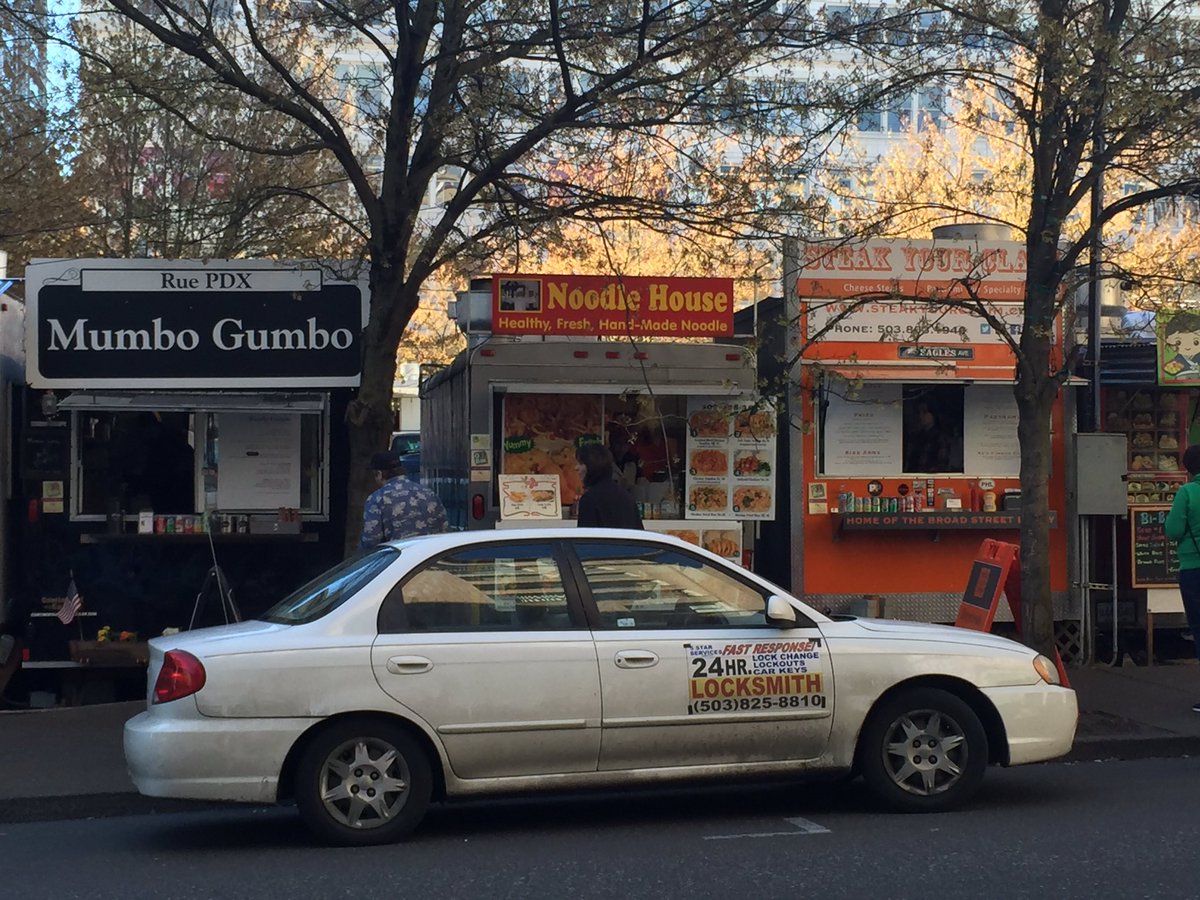
Exploring Portland

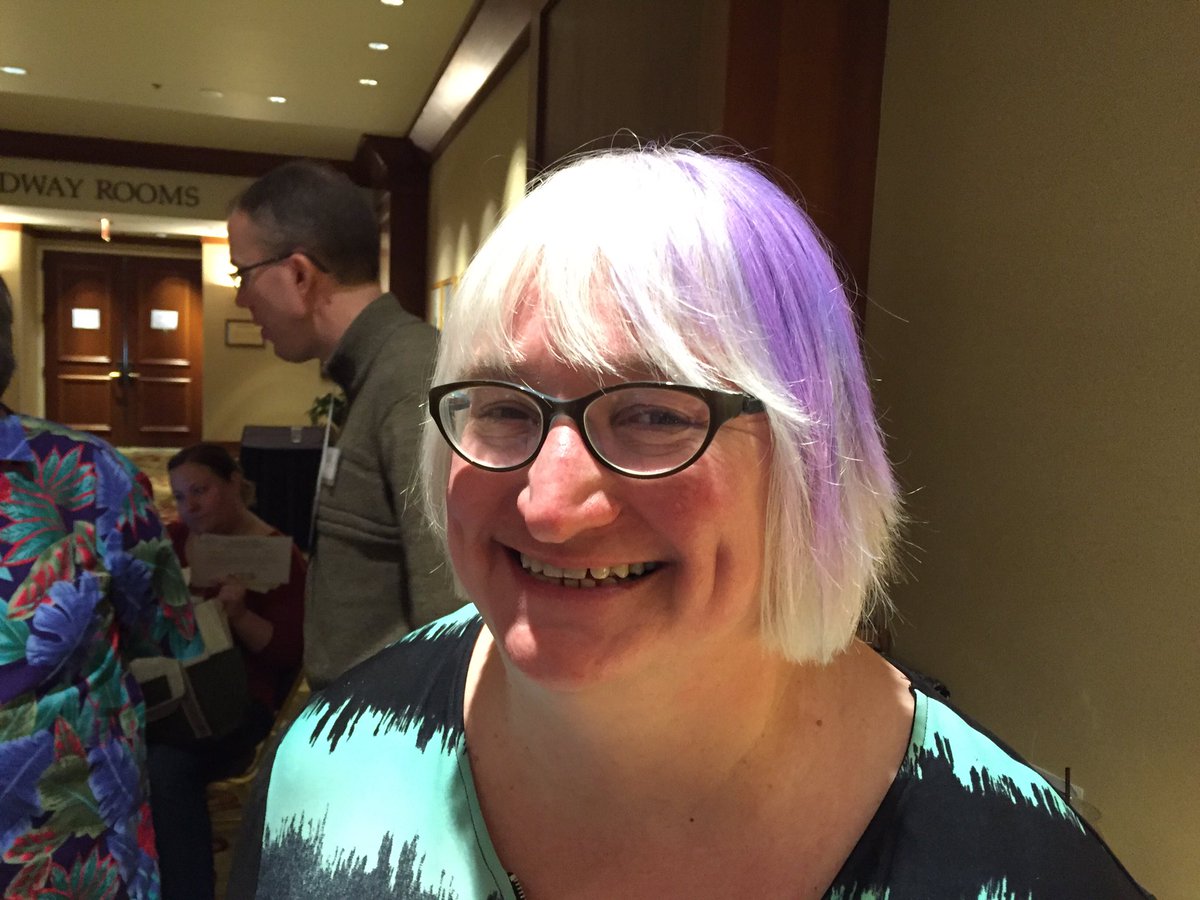
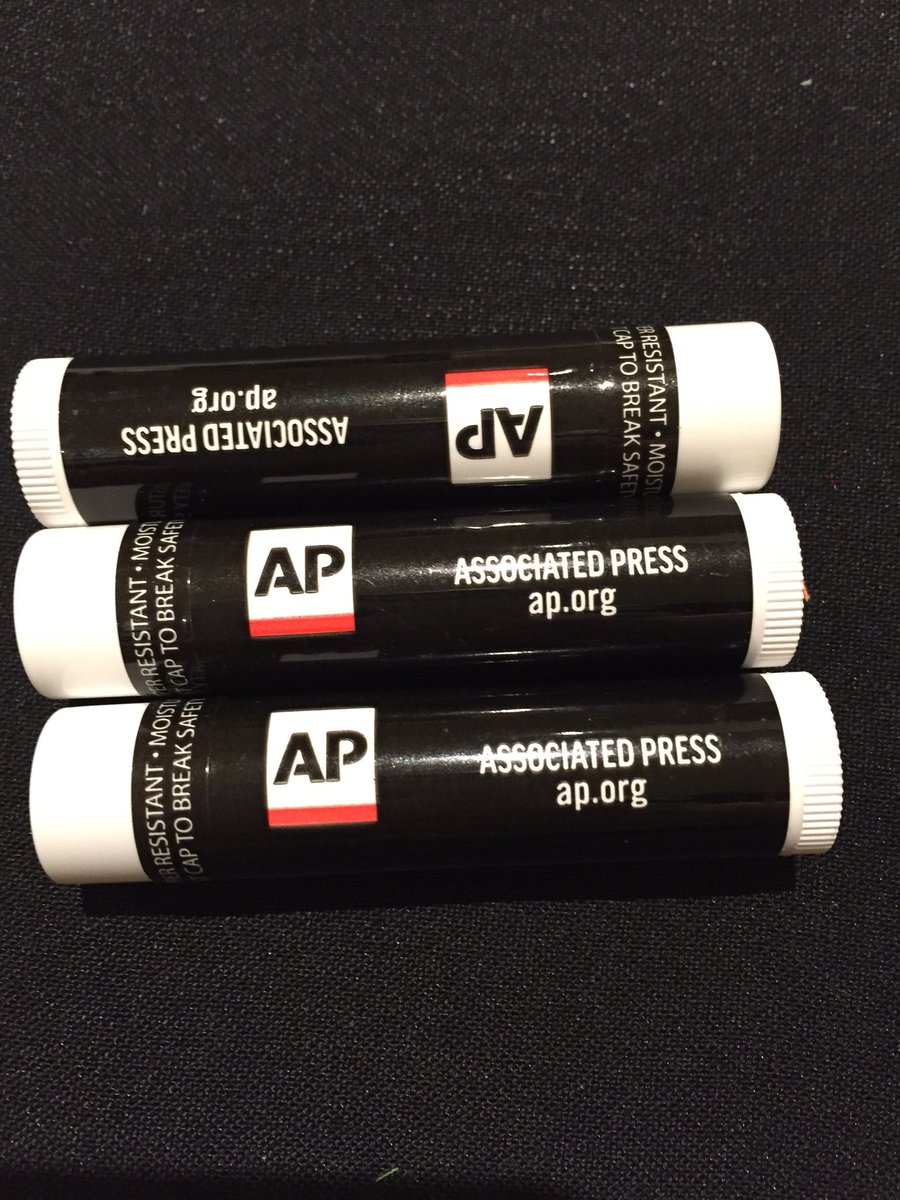
The day before the opening of ACES2016 was about food and style.

  1. Making my lunch choice.
  2. Getting the conference bags ready.
  3. A new do, Portland style.
  4. Scoring some early swag.
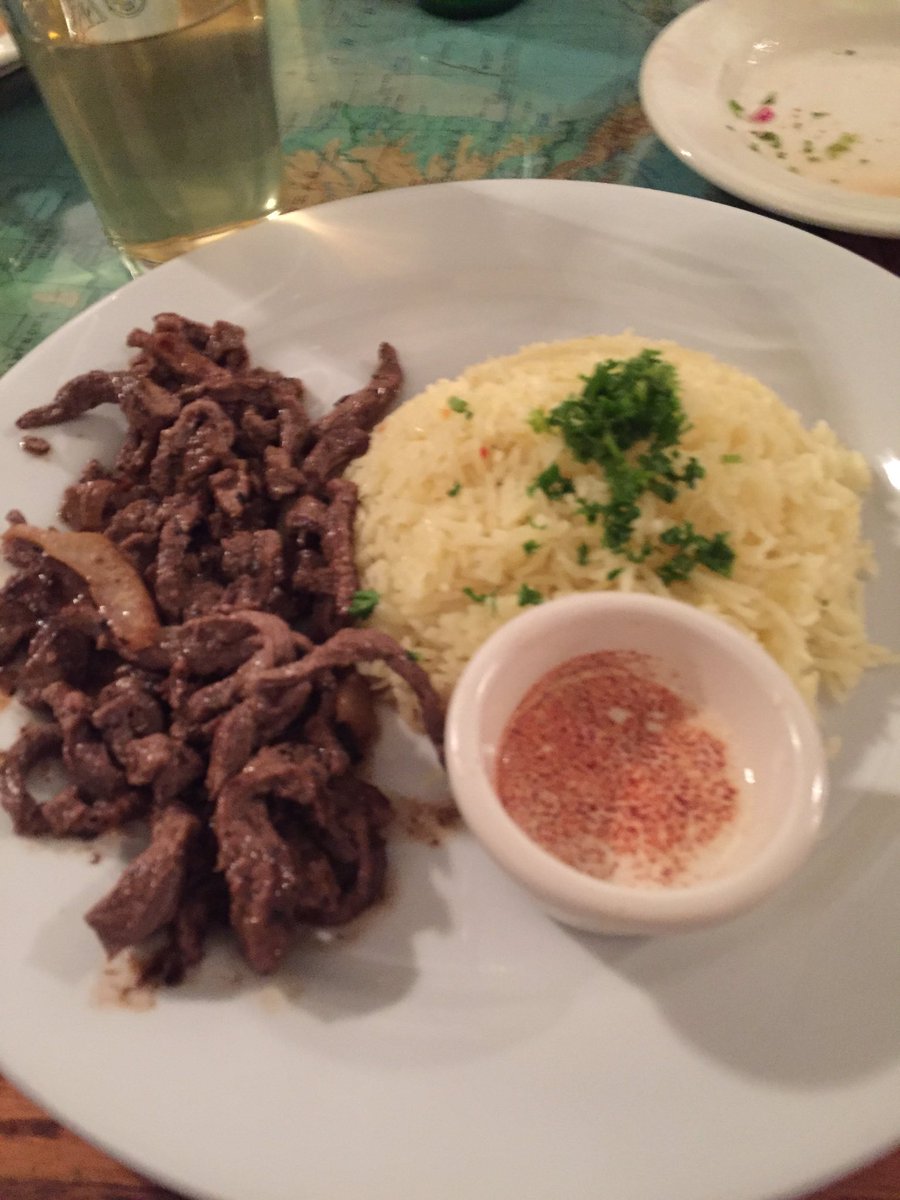
  5. Finishing the day with some shwarma.
  6. A plate of Shawarma at Karam Lebanese and Syrian Cuisine in Portland. #ACES2016 https://t.co/BzCAZPftS6

    A plate of Shawarma at Karam Lebanese and Syrian Cuisine in Portland. #ACES2016 pic.twitter.com/BzCAZPftS6


What do 600-plus copy editors do at a conference?

Well, a lot, really.

Like attending nearly 60 sessions on various kinds of editing this Thursday through Sunday. Talking about word usage and language sensitivity with fellow editing travelers (sometimes over drinks in the conference hotel bar).

And then there’s raising money for scholarships to help deserving copy editing students. I’m all aglow over the fact that two of those scholarship winners this year are my students — Valerie Hellinghausen and Sarah Fine. Sarah’s joining the crowd in Portland, Oregon, this week for a lot of learning and networking.

During the 20th American Copy Editors Society conference at the Hilton Portland, we’ll all get to hear from linguists (including top dictionary editors), AP and Chicago stylebook editors, top copy editors at newspapers, magazines and websites, award-winning freelancers and corporate, government and nonprofit editors. Topic include verification, sports editing, social media analytics, working with self-publishing authors, building a freelance business, solutions journalism, headline writing, inclusive language and writing a stylebook — and that’s just a few.

I’ll be presenting a session on verification on nontraditional sources and will be on a panel about making the move to college teaching.

We’re a bit booked now, but if you have a love of words and editing, I’d consider joining in the fun during the spring of 2017 in St. Petersburg, Florida.

Do you need paper in your reference library?

The American Copy Editors Society Twitter chat on Feb. 17 was about building your reference library.

Reading the Storify of the chat can give you some good ideas about things that ought to be in your resource stack.

Of course, one question is whether that library really needs shelves. I like to keep my paper copy of the AP Stylebook because sometimes it’s easier to look up what you don’t know by browsing. Online you have to have something to put in the search. (I feel even more that way about keeping a bound dictionary.)

But I admit that I do 90 percent of my lookups for grammar, style, spelling and fact checks online these days.

The key is to find trusted sources. I’m a big believer in finding the “about” page of every website I use as a resource. It will help you determine legitimacy.

I also have a rule of thumb — find the answer in more than one place, and make sure they match.

OK, so maybe I don’t do that with the regular dictionary. I trust Merriam-Webster, although I use other online dictionaries as well — I love Wordnik.com — because they offer different synonyms and examples. But when I’m fact checking, I don’t usually trust one source.

Many people will go to Wikipedia, which pops up first, but it can be an iffy source. However, it also can be a good jumping off point.

I recently checked a poll that used Census Bureau data, then I checked the Census Bureau website. The two didn’t agree. So who do you believe?  Sometimes you have to make judgments (I took the Census Bureau numbers, which were up to date). But finding the numbers in a third source helped.

It’s like adding a long column of numbers. I always do it twice. If the sums don’t agree, I’ll add them up at least two more times. Better safe than sorry.


ACES conference is on the horizon

The American Copy Editors Society is in big-time planning mode for its annual conference, March 31-April 2 in Portland, Ore. Since I’m a board member of ACES, I’m also in big-time planning mode.

aces200x52 I’ll be doing a session on fact-checking nontraditional sources, and we also have three other verification sessions planned. Plus a lot of great educational sessions on language sensitivity, stylebooks, freelancing and the business of editing, grammar and word usage, and dictionary panels.

This is the greatest word nerd conference in the United States (I am biased), and it’s possible 2016 might be our biggest ever in attendance. So if you’re thinking of attending, register soon.

When language sensitivity clashes with clarity

Last week on the copy desk, I became part of a discussion about the use of alternative pronouns in a newspaper article.

I’ve been involved in a lot of discussions with American Copy Editors Society colleagues about the value of the singular they and about language and sensitivity issues in particular, so I was glad to be part of the conversation.

But the gist went a little bit beyond the singular they. The reporter had asked the subjects of the article which pronoun each preferred (a good practice) and came back with a list of eight pronouns.

I was familiar with most of the pronouns on the list, including using singular they, ze and xe. But there was one word I’d never seen, xeheir. And I couldn’t find any lexicographical reference to it (including on Wordnik.com or the Urban Dictionary, which tend to be my go-tos when confronted with words that are not just new to me, but new.)

As Steven Petrow wrote in this 2014 column on gender-neutral pronouns on washingtonpost.com, “Language is about respect, and we should all do our best to recognize how people wish to be identified.” But what do you do when someone apparently made up a new word and no one will understand what it means?

In this case, after the first reference to this person, the name didn’t come up again in the article. That was organic on the reporter’s part (there wouldn’t have been another reference regardless of the pronoun debate), so it took us off the hook for an instant ruling.

It did leave a question, though. When does sensitivity trump clarity? I’m down with the changing nature of the language and use words now that didn’t exist 10 years ago. But if a reader can’t look the word up anywhere, should we use it in a general interest publication?

I think that decision has to be made on a case-by-case basis. In a profile of an individual, I would say use the word and define it (for example: “Smith, who uses ‘xxx,’ a word he coined, as a personal pronoun …”) In a short general news story, I’d try to write around it by always using the first or last name. I wouldn’t, however, use a different pronoun when the person made a specific request.

I’d also consult my publication’s style guide for assistance and suggest that it include a section on gender-neutral words if there isn’t one.

Oh, and if I just missed the definition of “xeheir” in my web search, please let me know.

RESOURCES: Here’s a link to a list of pronouns from the Gender Neutral Pronoun blog.

Happy National Punctuation Day

To celebration National Punctuation Day, I’ve created a little quiz with some fun facts on punctuation. Try it!

Screen Shot 2015-09-24 at 1.26.03 PM

I also wrote an essay for the American Copy Editors Society website, “Making a Point About Punctuation,” And last year, I wrote about punctuation bashers for Grammar Girl’s website.

Place your commas wisely, sprinkle in a few dashes, but keep those exclamation points to a minimum! (Oh, no. You didn’t.)

Finding red flags in copy

I’m the guest on the American Copy Editors Society Twitter chat today (4 p.m. Eastern) and I’ll be talking about tips for spotting the red flags in copy. So I thought I’d post a download here to the PowerPoint of a presentation I made on that subject at the ACES national conference this past April.Screen Shot 2015-08-12 at 11.11.21 AMOn a side note, because I moderate the #ACESchat, being a guest as well might be a bit tricky. I’ll try to keep the glitches at a minimum. I’ve been moderating the chat for 2 1/2 years and this is the first time I’ve thought about being the guest — but it’s a good topic we haven’t covered and one I’ve been doing academic work on.

The chats are great ways to get together with other copy editors (without leaving home), share tips and ideas, and even blow off steam about the profession. Follow them by searching for the hashtag #ACESchat on Twitter or check out some old ones on my Storify page.